



What's the difference between AKK probiotics and other probiotics?
Akkermansia muciniphila is the first discovered Verrucomicrobia, and is also a naturally occurring beneficial bacterium in the human intestine, accounting for only 3%-5% of the intestinal flora. Since akkermansia probiotics can grow in the intestinal mucus layer, it has a wide range of combined effects and can directly affect the host's immunity, metabolism, inflammation and other important physiological functions.
Source: Nature published a review of akkermansia muciniphila probiotic with reference to 150 articles. It brings together major research and clinical projects in which akk probiotic is applied, proving that maintaining the abundance of akk probiotics is associated with obesity, diabetes, hepatic steatosis, inflammation (colitis) and response to cancer immunotherapy; and regulates the synthesis and receptor expression of neurotransmitters through the gut-brain axis, affecting emotions, cognition, and circadian rhythms, and has a good improvement on ALS, insomnia, depression and anxiety.
AKK probiotics can colonize in various intestinal barriers and have a wider effect. AKK strains can colonize in the intestinal mucus layer and colon, which is equivalent to AKK bacteria colonizing in the intestinal "atmosphere"! Extremely anaerobic, general probiotics cannot survive, and they also need to "eat", while AKK bacteria can be self-sufficient by storing mucin, and can survive without eating! (The real strong)
Source: First floor review again The key point is the four major barriers of the intestine AKK bacteria can act on the four major barriers of the intestine at the same time: biological barrier, chemical barrier, mechanical barrier, immune barrier, so "defense" and "offense" are full, also known as fighting bacteria, multi-layer defense, anti-inflammatory power is full, and the effect on metabolism and immunity is stronger
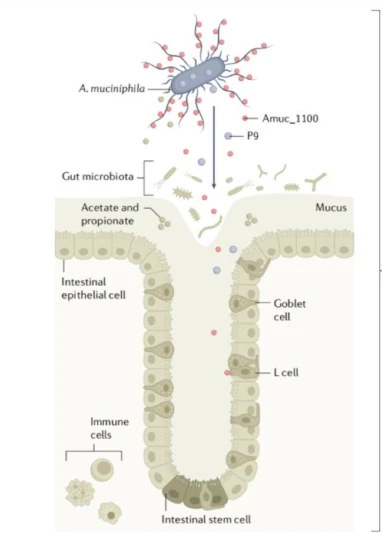
AKK probiotics delay aging through multi-purpose anti-inflammation. Aging is a condition in which the intestinal barrier is reduced and inflammation is increased. AKK bacteria enhance immunity, resist and suppress inflammation by improving the host intestinal barrier and intestinal flora homeostasis; at the same time, they secrete specificity Proteins Amuc_1100 and P9 can produce short-chain fatty acids with multi-functional anti-inflammatory effects, regulate GLP-1 receptors, resist sugar and inflammation, and delay aging.
Source: A paper published in the journal "Natural Medicine" in 2021 confirmed that AKK bacteria can delay aging. This study took progeria mice and healthy centenarians as research subjects and administered AKK bacteria. The results showed that AKK bacteria can significantly extend the lifespan of progeria mice. In a clinical trial study, the intestinal flora of people of different ages (including 160 centenarians, 112 elderly people aged 85-89 years old, and 47 adults aged 21-55 years old) were analyzed. . Centenarians have highly symbiotic bacterial groups, especially the abundance of AKK bacteria, proving that they deserve the title of "longevity bacteria"!