




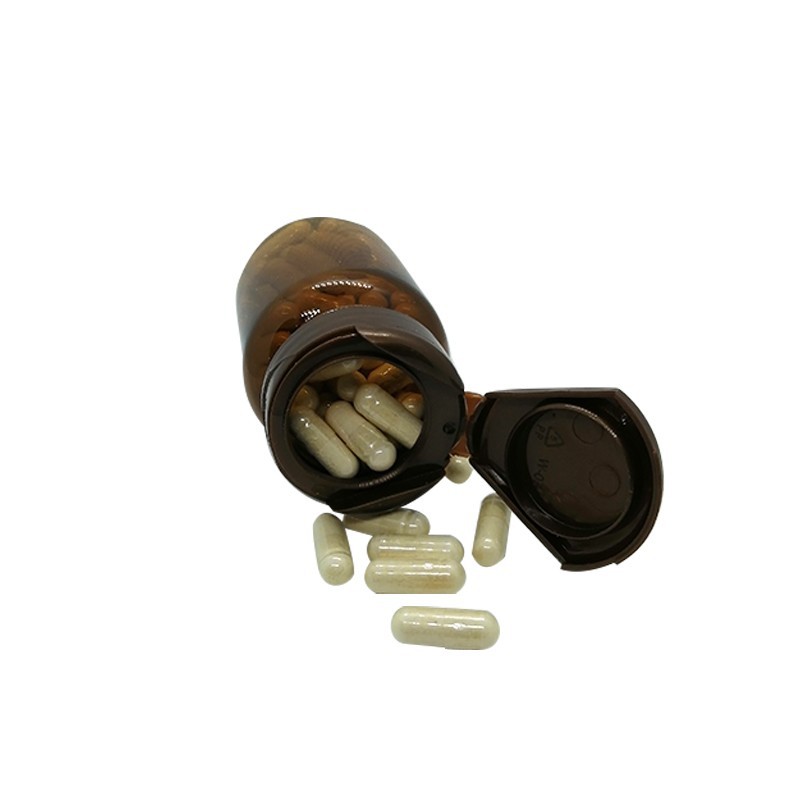
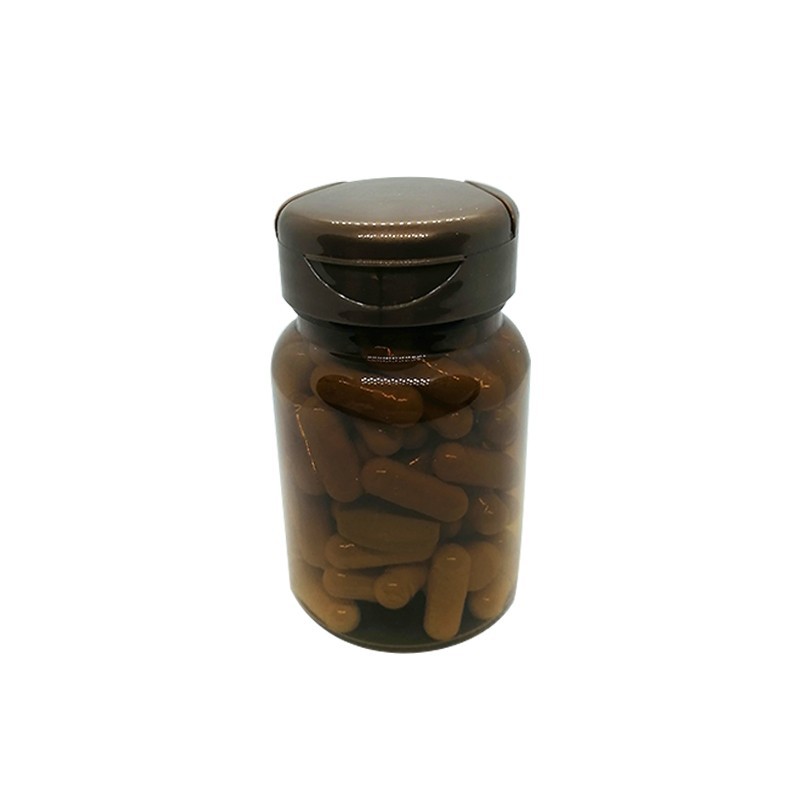
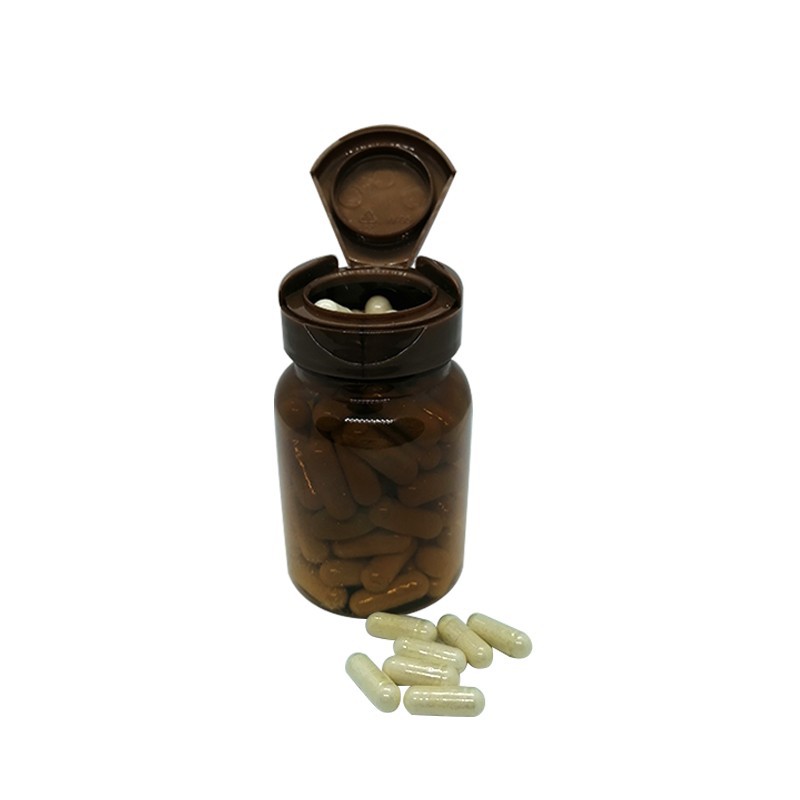
Probioway Co., Ltd. is one of the leading manufacturers and suppliers of probiotics after antibiotics in China, also supports custom service. Please feel free to wholesale bulk high quality probiotics after antibiotics from our factory. Good service and reasonable price are available.
Products Description
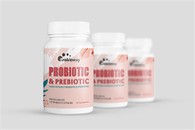
Name: Probiotics after antibiotics
Composition: L.plantarum HH-LP56, L.acidophilus HH-LA26, Bifidobacterium animals subsp.lactis HH-BA68,L.rhamnosus PB-LR76,L. paracasei HH-LP58
Composite powder: maltodextrin
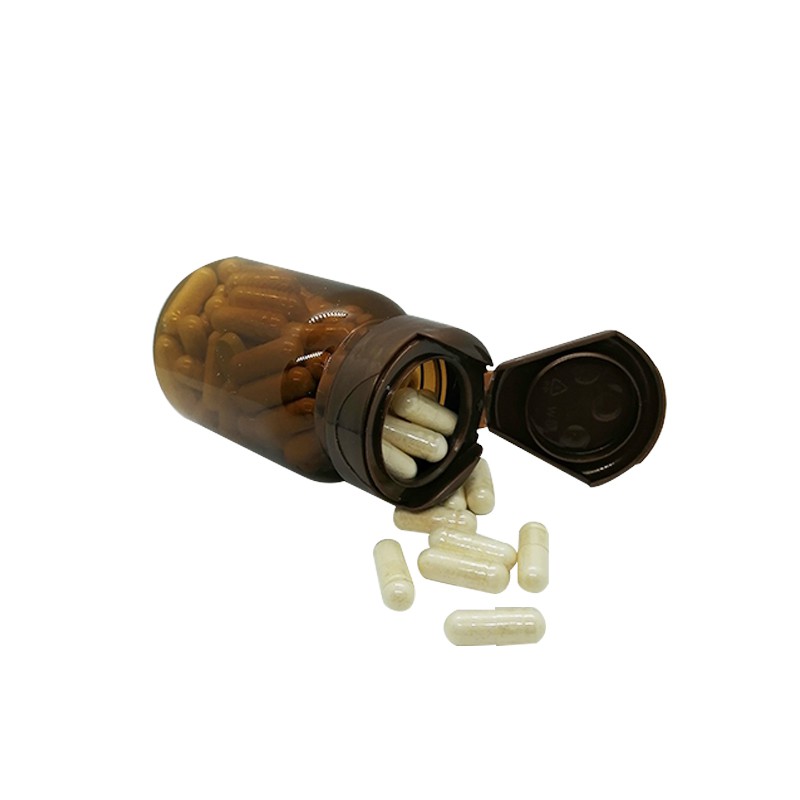
Capsule: Fructooligosaccharides, microcrystalline cellulose, silicon dioxide.
Function: Restore gut microbiota.
Main advantages
*Safety verification: All strains have been verified through various antibiotic resistance tests, hemolysis tests, acute and chronic toxicity trials, ensuring high safety.
*Non-GMO: All strains are isolated from common foods and the human body, without any genetic modification. Additionally, we use the raw materials that come from non-GMO crops, and we have conducted strict reviews and controls of our supply chain to ensure the non-GMO nature of the raw materials.
*Colonization ability: Our company has established it's own zebrafish testing platform. All strains have been verified for colonization ability in zebrafish and show good colonization ability in vivo.
*Data support: The product's functions have been validated from different dimensions, such as in vivo and in vitro, using both mouse and zebrafish animal models to verify its efficacy.
Packaging specifications
Dosage taken: 20B CFU/g per time, 1-2 times daily;
Composite: 1/5/10 kg per bag, 100b CFU/g;
Capsule customization: 20b/capsule, 30/60 capsules/bottle;
Storage method: Composite should be stored frozen at -18°C, capsules and granules should be stored sealed at room temperature.
Mechanism of action
As the 'sword' of modern medicine, probiotics after antibiotics have played an indelible role in combating bacterial infections. However, this 'sword' not only kills pathogenic bacteria but also causes significant disruption to the gut microbiota, the 'microscopic ecosystem' within the human body. The gut microbiota is a vast and complex ecosystem composed of billions of microorganisms. They live symbiotically with the human body, participating in numerous physiological processes such as food digestion and absorption, synthesis of nutrients, development and regulation of the immune system. Under normal circumstances, the gut microbiota maintains a dynamic balance, where beneficial bacteria, harmful bacteria, and neutral bacteria check and balance each other, collaborate together to maintain a healthy intestinal environment.
Most antibiotics currently used in medicine are broad-spectrum antimicrobials. During the course of treating diseases, they not only kill harmful microorganisms but also severely damage the beneficial bacteria in the gut. Once antibiotics enter the human body, they struggle to accurately identify and eliminate only pathogenic bacteria, instead exerting a broad killing effect on various types of bacteria in the gut. A large number of beneficial and neutral bacteria are mistakenly killed under the 'non-discriminatory attack' of antibiotics, leading to a sharp decline in their numbers.
As the number of beneficial bacteria decreases, the originally disadvantaged harmful bacteria gain more living space and resources, thereby multiplying in large quantities. Some conditionally pathogenic bacteria, such as Clostridium difficile, are usually unable to cause trouble due to suppression by the intestinal microbiota. However, after antibiotics disrupt the total number and balance of the intestinal microbiota, they proliferate extensively, triggering a series of intestinal diseases, such as antibiotic-associated diarrhea. These diseases not only cause physical suffering to patients but may also further exacerbate the disorder of the intestinal microbiota, creating a vicious cycle.
Probiotics are a category of active microorganisms that benefit the host by colonizing the human body and altering the microbial composition in certain parts of the host. The beneficial effects of probiotics on the human body mainly include:
1) Inhibit the growth of harmful bacteria: Probiotics, upon entering the intestine, can rapidly multiply and occupy colonization sites on the intestinal mucosa. They compete with harmful bacteria for survival space and nutrients, thereby inhibiting the growth and reproduction of harmful bacteria, reducing the toxins produced by harmful bacteria, and lowering the risk of infection.
2) Promote the recovery of beneficial bacteria: Supplementing with probiotics helps accelerate the reconstruction of beneficial bacterial flora in the intestine. Probiotics can act as 'pioneer bacteria' to form a favorable micro-ecological environment in the intestine, creating favorable conditions for the growth of other beneficial bacteria.
3) Enhance intestinal barrier function: Probiotics can secrete certain substances such as mucin. These substances can strengthen the barrier function of the intestinal mucosa, repair intestinal mucosal cells damaged by antibiotic use, reduce intestinal permeability, and prevent harmful bacteria, toxins, and undigested food particles from entering the bloodstream and triggering systemic inflammatory reactions.
4)Additionally, they have effects such as promoting intestinal peristalsis and improving digestive function.
probiotics after antibiotics is formulated with combination of L.plantarumHH-LP56,L.acidophilusHH-LA26,Bifidobacterium animals subsp. lactis HH-BA68,L.rhamnosus PB-LR76,L. paracasei HH-LP58. It contains two categories of bacteria: lactobacilli and bifidobacteria, which can act respectively on the small intestine and large intestine of the human body to restore the balance of gut flora in various segments intestine and regulate intestinal flora disorders caused by antibiotics.
Safety of strain
Beneficial bacteria were isolated and screened from matrices such as healthy human bodies and traditional fermented foods. Through 16S rDNA gene sequencing, it was confirmed that the obtained strains are safe and reliable and will not cause harm to the human body. By comparing their tolerance to gastric acid and bile salts as well as mucosal adhesion, a rescreening identified probiotics including L.plantarum HH-LP56, L.acidophilusHH-LA26,Bifidobacteriumanimalssubsp.lactis HH-BA68,L.rhamnosus PB-LR76,L. paracasei HH-LP58, which can colonize well in the body.
Functional verification
1) Colonization ability
This experiment uses zebrafish larvae developed to 7 days post-fertilization (dpf) as research subjects. The test strains were labeled with 5(6)-CFDA and SE, and the bacteria incubated with the probe were fed to the zebrafish larvae. After 24 hours, the probiotics were removed. The green fluorescence in the zebrafish intestines was observed under a fluorescence microscope, and the colonization ability of each strain was analyzed based on the fluorescence intensity.
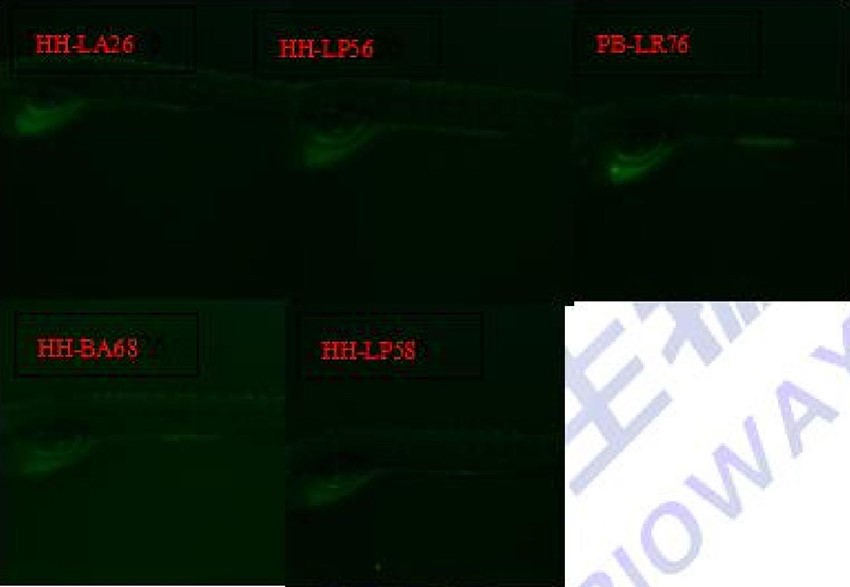
The prerequisite for probiotics to exert their effects in the body is their ability to colonize the gut well. By colonizing the intestinal epithelial cells, they utilize nutrients in the intestine to reproduce and metabolize, producing beneficial substances that confer health benefits to the organism. As shown in the figure above, the five tested strains all exhibit strong green fluorescence under a fluorescent microscope, indicating that the tested strains have good colonization ability.
2) Antibacterial ability
Use the Oxford cup method to detect the inhibitory ability of the test strains against common harmful bacteria (Escherichia coli, Salmonella, Staphylococcus aureus). Measure the diameter of the inhibition zone (mm) and analyze the inhibitory ability of each strain and mixed bacterial powder against harmful bacteria.
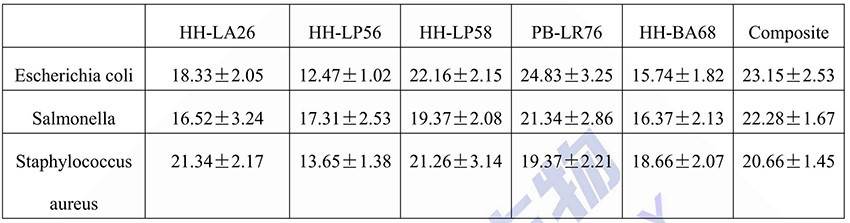
As shown in the table above, each single strain has a good inhibitory effect on common harmful bacteria. After reasonable combination, their effectiveness can reach an ideal state, which can exert a good inhibitory effect on common harmful bacteria causing intestinal diseases and protect the health of the body.
3) Antibiotic-associated diarrhea
SPF-grade KM mice were used as experimental subjects. After 7 days of adaptive feeding, they were randomly divided into groups with 8 mice per group. In the blank control group, mice were gavaged with0.3 mL normal saline twice daily at 9:00 and 13:00. In the model group, mice were gavaged with 0.3 Ml cefriaxone sodium solution and 0.3 mL normal saline at 9:00 and 13:00, respectively. For the experimental groups, mice were gavaged with 0.3 mL ceftriaxone sodium solution and the corresponding 0.3 mL bacterial suspension at 9:00 and 13:00, respectively. Mice in each group were housed separately, and the treatment was continued for 7 consecutive days. All groups were managed under identical conditions during the experiment.
The loose stool rate was determined by counting the number of loose stools and total stools per mouse within 2 hours after gavage at 13:00. The loose stool rate is the ratio of the number of loose stools to the total number of stools per mouse within 2 hours, with the results as follows:
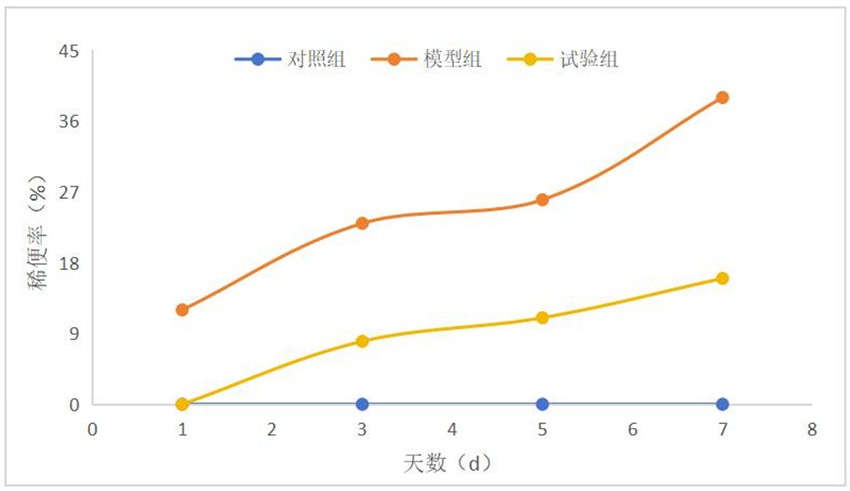
As shown in the figure above, mice treated with ceftriaxone sodium by gavage exhibited loose stools on the first day, and the incidence of loose stools increased significantly with the extension of time, demonstrating that the diarrhea model was successfully constructed. After treatment with probiotic powder mixture, although loose stools still existed, there was a significant difference compared to the model group, indicating that this product can effectively alleviate diarrhea caused by antibiotics.
Hot Tags: probiotics after antibiotics, manufacturers, factory, custom, wholesale, bulk, acidophilus bifido candida, baby probiotics, best probiotic supplement for digestive health, prebiotic and postbiotic capsules, prebiotic probiotic postbiotic, the best gut health supplements