



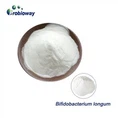


You may be curious about how live probiotics are cultured. Today, Probioway Co., Ltd. will explain the production process of probiotic powder.
1. Strain Storage
Companies store rigorously authenticated "original strains" in ultra-low-temperature strain banks (such as liquid nitrogen or ultra-low-temperature freezers), maintaining separate master and working libraries and duplicate backups. This ensures the strain's characteristics remain unchanged over time and prevents accidental loss. Each strain is individually numbered, archived, and traceable, and regularly verified for activity and purity to ensure the "seeds" remain healthy and stable-this is the "germplasm resource" of the probiotics factory.

2. Strain Transfer
A small amount of strain is removed from the strain bank and transferred to culture medium in a sterile environment for "awakening." The process typically progresses from slant/vial to shake flask to small seed tank, gradually increasing its volume and activity. Microscopic observation, viable counts, and contamination testing are performed at this stage. Only strains that fully meet standards are allowed to proceed to the next fermentation step to prevent the introduction of substandard strains into large-scale production.
3. Fermentation Scale-Up
The activated bacterial solution is transferred to a pilot or seed fermentation tank. Parameters such as temperature, pH, dissolved oxygen, and agitation are adjusted to allow the strain to rapidly grow under conditions closer to industrial conditions. Online monitoring (e.g., pH, dissolved oxygen, and temperature) is used to create a "fermentation curve" to identify the strain's optimal growth range, providing data for subsequent large-scale production.
4. Large-Scale Fermentation Production
The seed liquid is transferred to a large-scale fermentation tank (cleaned, disinfected, and steam sterilized). Batch or fed-batch fermentation is performed to continuously provide nutrients and a suitable environment for the bacterial colony. During this stage, key priorities include:
- Sterile control: Sterile air filtration, valve and pipe sealing;
- Parameter control: Temperature, pH, dissolved oxygen, and foam;
- Harvest timing: Harvest the tank when bacterial activity is at its highest and density reaches the target.
This ensures a high yield of highly active bacterial cells.

5. Initial Bacterial Cell Concentration
Besides bacterial cells, the fermentation broth also contains culture medium components, so the cells need to be removed and thickened. Common methods include centrifugation or membrane filtration, performed gently at low temperatures to minimize shear damage. Appropriate addition of protectants/stabilizers and buffer exchange can help improve survival and reduce oxidative stress during subsequent freeze-drying.
6. Freezing/Pelleting of Bacteria
The concentrated bacterial broth is mixed with the protectant, carrier, and other components according to a predetermined formula, rapidly frozen, and pelletized into small particles. The size and uniformity of the particles are crucial: the more uniform the particles, the more consistent the subsequent drying and the better the product stability. The particles are still "wet" at this stage, but simply prepare for the next freeze-drying step.
7. Freeze-Drying
Freeze-drying generally involves three steps: pre-freezing → sublimation drying (primary drying) → desorption drying (secondary drying). Under vacuum conditions, ice is directly converted from a solid state to water vapor and carried away, minimizing thermal damage to the cells. Different strains have different "process windows," requiring optimization of the plate temperature, vacuum level, and drying time. The endpoint basis usually includes moisture content, viable bacterial count, appearance state, etc. The purpose is to obtain freeze-dried bacterial powder with high activity, low moisture, and strong stability.
8. Grinding and Mixing
The freeze-dried blocks or granules are gently ground and sieved before being evenly mixed with the carrier or excipients in a stainless steel container. Where possible, this process is performed in a nitrogen-filled or low-humidity environment to minimize oxidation and moisture resorption. Testing for uniformity (RSD), viable cell count, moisture content, and contaminant limit is then performed to ensure consistent quality across batches.
9. Packaging
Freeze-dried powder is packaged as bulk raw materials for single or mixed strains according to customer needs:
- Carrier and Specifications: Select an appropriate carrier (e.g., dietary fiber) and target viable cell count/gram;
- Packaging: High-barrier aluminum foil bags, composite drums, etc., often equipped with nitrogen filling, desiccant, or deoxidizer;
- Labeling and Traceability: Clear batch numbers, delivery dates, and storage recommendations;
- Stability Studies: Accelerated and long-term sample retention to verify shelf life.
In this process, professional suppliers like Probioway Co., Ltd. provide customized formulations, technical support, and regulatory compliance documentation tailored to the needs of various industries (food, health supplements, pet nutrition, special medical applications, etc.), earning recognition and long-term partnerships with branded companies.
10. Finished Product (Brand Post-Processing)
After downstream brands purchase high-quality probiotic raw materials, they undergo secondary processing in a controlled environment according to the formula into end-use products such as powders, capsules, chewable tablets, and stick packs:
- Factory Re-Inspection: Viable cell count, contaminant limit, allergens, heavy metals, moisture content, etc.
- Mixing and Filling: Precise mixing and quantitative packaging in a cleanroom
- Finished Product Inspection: Release testing and sample retention to ensure label consistency with actual content
- Storage and Display: Observe recommendations such as low temperature, dark protection, and dryness to ensure stability throughout the entire process.
This ensures that consumers receive probiotic supplements that are reliably active, in an appropriate dosage form, and convenient to take.
In short, the production of probiotic freeze-dried powder begins with a "good seed," progressing through a systematic process of aseptic amplification, gentle concentration, scientific freeze-drying, precise blending, and rigorous packaging. Each step is optimized around viable cell count, stability, and safety, ensuring that these tiny and fragile probiotics are consistently delivered to consumers' intestines, unleashing their full health benefits.