




Science and Technology Innovation Center Han Qiaoyu December 29, 2023
Probiotics refer to live bacteria that can produce effects that promote the health of the host when reaching a certain number. Probiotics colonizing the intestines can help digest food, produce metabolites that are beneficial to the health of the host, and maintain the homeostasis of the host body. Probiotics have a variety of health effects, such as regulating intestinal flora, protecting the intestinal barrier, antioxidant and regulating immunity, etc., and can reduce the risk of various chronic diseases.
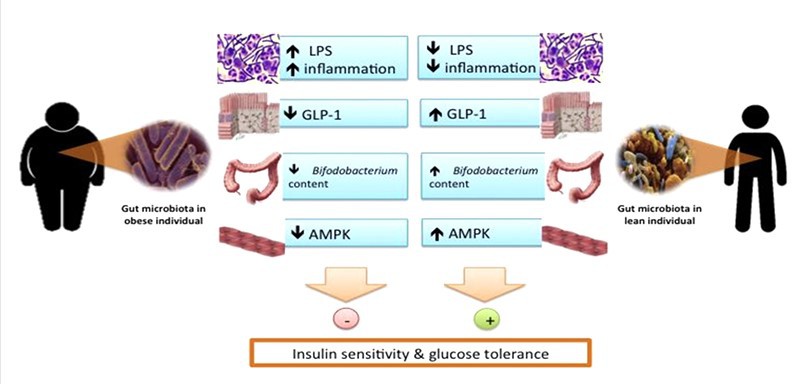
Probiotics regulate blood sugar by regulating intestinal flora balance, intestinal immunity, microorganism-gut-brain axis, microorganism-gut-liver axis, etc. Its mechanism of action includes: probiotics consume glucose; reduce chronic low-grade inflammation and oxidative stress; regulate intestinal flora and increase short-chain fatty acid content; enhance immunity; improve insulin resistance; probiotics can also produce bacteriocins and other substances, Protect pancreatic islets, promote pancreatic islet function, inhibit α-glucosidase, etc.; the polypeptides produced during the proliferation of probiotics can act on the NOD2 receptors of hypothalamic γ-aminobutyric acid neurons through the brain-gut axis, inhibiting synapses The activity of posterior neurons plays a role in suppressing appetite and improving metabolism.
In addition to regulating blood sugar, probiotics can regulate blood pressure by regulating the body's intestinal flora and improving antioxidant capacity. In addition, probiotics can also prevent hypertension by inhibiting ACE activity. So far, many excellent strains with high production of ACE inhibitory peptides have been screened out, and a large number of human test results have shown that the intake of fermented foods containing ACE inhibitory peptides can help Lower blood pressure levels.
Probiotics have multiple mechanisms of action for lowering blood lipids. Currently, it is believed that there are mainly four main mechanisms: absorbing cholesterol from the blood into the cells through bacterial cells for utilization or adsorbing on the cell membrane and expelling it from the body, thereby reducing cholesterol content; regulating cholesterol-related gene expression level inhibiting the intestinal absorption of cholesterol and fat and reduces blood lipid levels; it reduces cholesterol levels through substances such as bile salt hydrolase produced by intracellular secretion; it inhibits cholesterol through biological inhibitors such as cholesterol ester acyl-CoA inhibitors produced by secretion Key enzymes in the synthetic pathway may inhibit the formation of precursor substances, thus affecting serum cholesterol levels.
references:
[1] Li Yongzhen, Zhang Tiantian, Wang Junxian, etc. The role of probiotics in blood sugar regulation [J/OL]. Bulletin of Microbiology: 1-25 [2023-11-15].
[2] Wang Yusheng. Excavation and mechanism research of probiotics with the function of preventing hypertension[D]. Jiangnan University, 2021.DOI: 10.27169/d.cnki.gwqgu.2021.001027
[3] Sun Qian, Wan Xiangyuan. Research progress on probiotics in alleviating hyperlipidemia and hyperglycemia [J]. Journal of Henan University of Technology (Natural Science Edition), 2018, 39(06): 125-132. DOI: 10.16433/ j.cnki.issn1673-2383.2018.06.022.