





The global obesity crisis: a silent epidemic
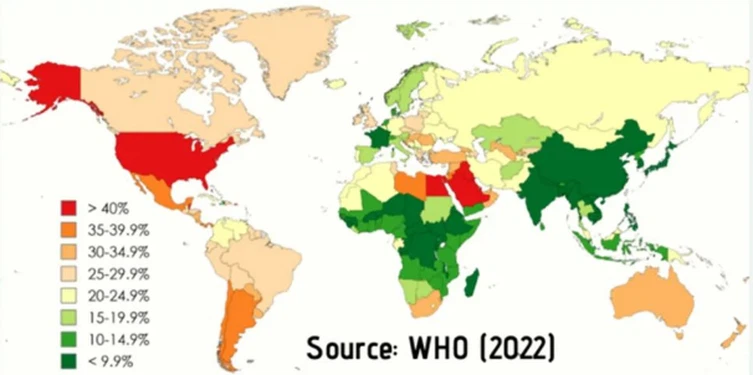
According to a recent study in the Lancet, 3.8 billion adults worldwide will be overweight by 2050, equivalent to half of the current world population. The United States leads the pack with 36 percent of adults obese, while China's obesity rate has jumped from near zero to 16.4 percent in four decades, and the obesity rate among white-collar workers in cities such as Beijing, Shanghai, Guangzhou and Shenzhen has exceeded 25 percent. What is more worrying is that China's adolescent obesity rate is increasing at a rate of 1.5% per year, and the phenomenon of "little fat" in primary and middle school students has become a new public health challenge.
Medical consensus
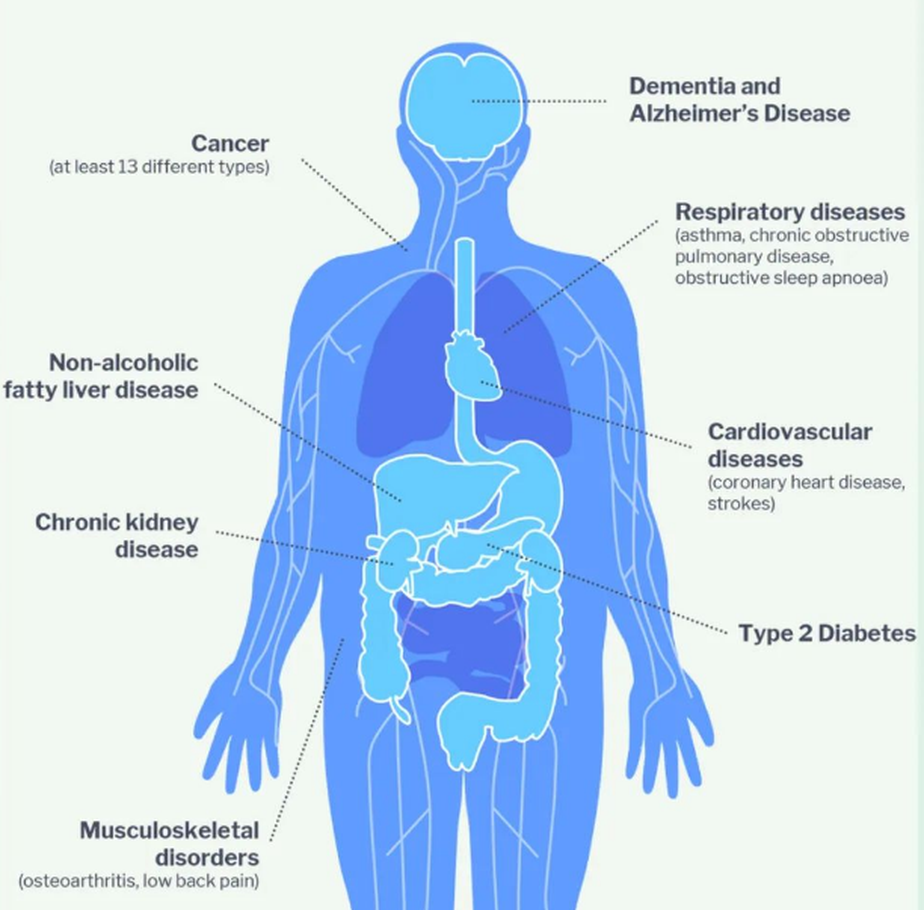
Obesity is a cause of chronic disease
The World Health Organization defines obesity as a "global chronic disease" that is far from harmful Superbody problem
01
Metabolic disorders
For every 5kg/m² increase in BMI, the risk of diabetes is 3 times higher
02
Cardiovascular crisis
The incidence of coronary heart disease in obese people is 74% higher than that in normal weight people
03
Tumor association
13 types of cancer have a clear association with obesity
Dialogue between Chinese and Western Medicine
Health wisdom across millennia
1.The triple line of defense of modern medicine
- Basic intervention: The American Diabetes Association recommends a daily caloric gap of 500-750kcal, with 150 minutes of moderate-intensity exercise per week
- Drug innovation: GLP-1 agonists make it possible to lose 15% of annual weight, but beware of gastrointestinal side effects
- ·Surgical breakthrough: The 5-year follow-up of laparoscopic sleeve gastrectomy showed that 80% of patients were relieved of diabetes
2. Thousands of years of experience in TCM syndrome differentiation
- Physical classification: "Huangdi Neijing" divides obesity into "paste people" (abdominal obesity), "fat people" (uniform obesity), "meat people" (muscle type)
- Phlegm-dampness theory: Li Dongyuan's Spleen and Stomach pointed out that "fat people have more phlegm-dampness", emphasizing that strengthening spleen and removing dampness is the core
- Time health: The meridian flow theory advocates that 戌时 (19-21 o 'clock) after fasting, in line with modern biological clock research
National action
Integrating weight management into the Healthy China Strategy
- Professional support: weight clinics are set up in hospitals above level 2
- Scientific guidance: The National Health Commission has issued the Guidelines for Adult Obesity Diet and the Guidelines for Child and Adolescent Obesity Diet. According to the Guidelines for Adult Obesity Diet (2024 version) issued by the National Health Commission in North China, the original description is as follows:
Most places in North China like pasta and poultry meat, vegetables and aquatic intake is not much, heavy salty dishes. This series of recipes follow the principles of diet for obese patients, and reasonably match the seasonal characteristics of North China, respecting the traditional drinks in the region
| Spring Recipe 1 (total energy about, 1200kcal) | |
| Breakfast | Yam powder egg soft cake (Yam powder *50g, whole wheat flour 10g, skim milk 50mL, egg 50g) Spring bamboo shoots mixed with platoon and chives (platoon *20g, chive 10g, spring bamboo shoots 100g) Skim milk (250mL) Yellow Heart Kiwi (100g) |
| Chinese food |
Gorgon Euryale corn rice (corn kernel [fresh] 20g, Gorgon Euryale seed *10g, rice 50g) Stir-fried shredded pork with ginger (pork 25g, ginger *80g, garlic 10g) Fried Baby Cabbage with Garlic (Baby Cabbage 150g) Shrimp skin and white gourd Kelp Soup (Shrimp skin 3g, white gourd 100g, kelp [water hair] 30g, coriander 5g) |
| Dinner |
Purple potato steamed bun (Purple potato 30g, whole wheat flour 50g) Fried shrimps with broccoli (50g fresh shrimps, 70g broccoli) Minced Cabbage Balls (lean pork 30g, minced cabbage 50g, crab mushroom 20g, Wolfberry ·5g) |
| Oil and salt | Total daily consumption: vegetable oil 24g, salt <5g |
|
Note: 1. This recipe provides about 1200kcal of energy, including 57g protein, 173g carbohydrates and 30g fat; Macronutrients account for approximately 19% of total energy: protein, 58% of carbohydrates, and 23% of fat. 2.* For the food and medicine substances used in the recipe, such as mountain medicine, platycodon, Gordon Euryale fruit, etc. |
|
| Spring Recipe 2(total energy approx. 1400kcal) | |
| Breakfast |
Shepherd's purse ravioli (50g flour, 50g shepherd's purse, 30g pork loin, 5g cilantro) Steamed milk custard (skim milk 110mL, egg 50g) Cabbage mixed with shrimps (100g cabbage, 2g shrimp) |
| Chinese food |
Purple rice (purple rice 30g, rice 20g) Braised Belt fish (50g belt fish, 5g onion and ginger, 10g coriander) Cooked bean sprouts in vinegar (100g Mung bean sprouts, 10g red bell pepper) Walnut and orange yogurt (Walnut 5g, orange 50g, sugar-free yogurt 150g) |
| Dinner |
Diced pork noodles (15g lean pork, 100g fresh cut noodles, 80g eggplant, 30g mushroom [fresh], 10g chives) Sauteed tofu (Tofu 50g, Xueliyan 15g, green garlic leaves 20g) Steamed dandelion (dandelion [fresh] ·80g, corn flour 15g, millet spicy 5g) |
Probiotics and weight control
Probiotics play a role in the process of weight loss mainly by regulating intestinal flora, improving intestinal barrier function, affecting energy metabolism and appetite regulation. Specifically, certain probiotics can increase the proportion of beneficial bacteria in the gut and reduce the number of harmful bacteria, thereby improving the balance of gut microbes. This helps to reduce intestinal inflammation, reduce intestinal permeability, and prevent harmful substances from entering the body to trigger an inflammatory response. In addition, probiotics can also produce metabolites such as short-chain fatty acids by fermenting dietary fiber, which can not only provide energy for the host, but also regulate the secretion of intestinal hormones, affecting appetite and satiety, and thus reducing food intake. At the same time, probiotics may also affect fat storage and metabolism, promote fat decomposition, and reduce fat accumulation.
| Strain | Action mechanism |
| Lactobacillus acidophilus | Produce SCFA, reduce intestinal permeability and reduce inflammatory response |
| Animal bifidobacterium lactobacillus subspecies | Regulate intestinal flora, reduce fat absorption and storage |
| Lactobacillus plantarum | Promote fat breakdown and reduce fat accumulation |
| Bacillus casei | Regulate appetite and energy metabolism by affecting gut hormone secretion |
| Bifidobacterium brevis | Regulating gut flora and metabolites affect fat metabolism |
Strain screening based on zebrafish platform
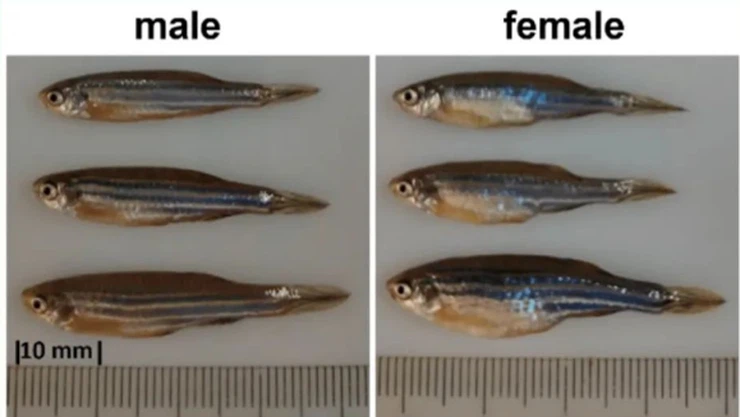
Based on the zebrafish high-throughput functional strain screening platform built by Hehe Biology, a variety of obesity and metabolic disease related models can be constructed to verify the strain and formula function
Experimental principle: The obesity model of adult fish was established by feeding high fat diet. It is known that the lipid composition of yolk sac of zebrafish is similar to that of mammalian/human abdominal fat. The fat can be stained and labeled with the specific fluorescent dye Nile red in vivo. When observed under fluorescence microscope, the reduction of fluorescence intensity indicates the promotion of lipolysis. Therefore, it can be used for rapid screening of probiotic strains with weight management functions.
Evaluation indicators: ① body weight ② body circumference ③ yolk sac fluorescence intensity
Example results: